Author: FlashActionClick
The Ultimate Short Story Reading Nook: A Priority in Modern Home Design
In today’s fast-paced world, where time for relaxation is often scarce, the concept of a personal reading nook has become more than just a cozy corner in the living room. It’s now a dedicated space designed to offer sanctuary from the hustle and bustle, providing a perfect retreat for those who crave quiet moments with a good book. The ultimate short story reading nook, often conceived as a self-contained area or even an entire room, is rapidly gaining traction in modern home design. These nooks are becoming an essential part of home layouts, crafted not just for reading, but for creating an atmosphere where one can escape into a literary world, complete with the comforts of drinks, snacks, and a carefully curated ambiance.
Design-Focused Reading Nooks
 Gone are the days when a reading nook was simply a small chair by the window. Now, homeowners are treating reading areas as an integral part of their home design, creating spaces that are private, functional, and luxurious. Whether it’s a cozy alcove tucked into a corner, a built-in window seat, or even an entire room transformed into a literary lounge, the goal is to craft an environment that promotes relaxation and uninterrupted reading time. Soft lighting, plush cushions, ergonomic seating, and calming décor elements like neutral tones and natural textures are all key components in designing the perfect nook. These spaces are designed to allow readers to fully immerse themselves in their short stories without distractions, offering a much-needed break from the digital world.
Self-Contained Are Better, Portable Drinks & Snacks
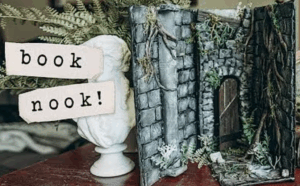 One key element in making the reading nook truly self-contained is the inclusion of comfort-enhancing features such as drinks and snacks. To create a truly indulgent experience, modern reading nooks often incorporate small refrigerators, coolers, or even portable coolers to store drinks and snacks. Imagine having an iced tea, fresh fruit, or a favorite snack within arm’s reach, all without needing to leave your cozy corner. A small cooler can be the perfect addition to a reading nook, keeping your beverages cool and your snacks fresh, whether you’re enjoying a warm cup of tea in winter or a chilled soda on a hot afternoon. The use of coolers, particularly the ones available on coolers on sale, allows for the flexibility of moving your snacks and drinks with ease, whether you’re lounging in your nook, taking your book outside, or simply relocating to another corner of the house.
Portable coolers come in a variety of styles—from small, compact units that fit perfectly under a table or beside a chair, to larger versions with extra compartments for multiple snack options. Some coolers even double as stylish furniture pieces, offering a sleek, modern design that complements the aesthetic of the reading space. With these coolers, you can enjoy your favorite snacks without the need to constantly run back and forth to the kitchen, ensuring that your reading experience remains uninterrupted.
Comforting Touches
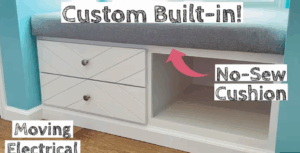 In addition to coolers, many homeowners are also opting to install built-in shelves, soft throws, or even tiny desks for jotting down thoughts about the stories they’re reading. The ultimate short story reading nook is a personal retreat where readers can not only escape but also engage with the stories they love. The inclusion of drinks, snacks, and a thoughtful layout makes these nooks a luxurious priority in home design, turning reading into an experience that’s as much about comfort and convenience as it is about the joy of getting lost in a good book.
With a little creativity and attention to detail, the ultimate reading nook can become a cherished space in the home—offering not just a place to read, but a sanctuary for personal reflection, relaxation, and indulgence.
The Real Story Behind The Stinky Cheese Man: Lessons Beyond the Laughs
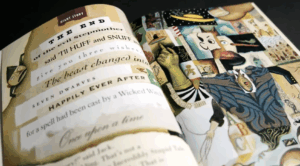
When The Stinky Cheese Man and Other Fairly Stupid Tales hit bookshelves in 1992, it turned the world of children’s literature upside down. Written by Jon Scieszka and illustrated by Lane Smith, the book became an instant classic for its witty humor, absurd twists, and playful take on traditional fairy tales. Its title story, “The Stinky Cheese Man,” is a hilarious parody of “The Gingerbread Man,” replacing the sweet, cookie protagonist with a lump of smelly cheese that sends everyone running away instead of chasing after him. But beyond the laughter and clever illustrations lies a deeper principle that has made the story so enduring: it’s a lesson about self-awareness, imperfection, and the power of not taking life—or yourself—too seriously.
The Storyline Behind The Stink
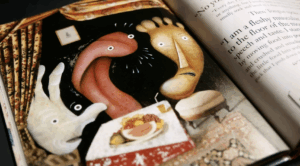 In the story, the Stinky Cheese Man is baked by a little old lady who, instead of crafting a delightful gingerbread boy, accidentally creates a creature made of old cheese and a slice of bread for a head. As he runs through the countryside, his pungent odor drives everyone away, from the cow to the fox. In the end, his smelly nature leads to his downfall when even his would-be predator refuses to eat him. On the surface, it’s a ridiculous, comical tale that children love for its silliness. Yet, on a deeper level, the story carries a surprisingly mature message about embracing one’s flaws and the absurdities of existence. The Stinky Cheese Man never tries to hide who he is—he simply exists as he was made, stinky and strange, and that authenticity, while isolating, is also oddly admirable.
Scieszka’s book, as a whole, was revolutionary because it broke the “rules” of children’s storytelling. It used metafiction—stories that are aware of themselves as stories—long before that was common in children’s books. Characters interrupt the narrator, pages are out of order, and fairy tales are rewritten in ways that expose their clichés. This irreverence teaches young readers an important principle: that it’s okay to question tradition, laugh at convention, and think creatively. The Stinky Cheese Man encourages readers to see familiar things from a new perspective, a skill that applies far beyond fairy tales. It’s not just about rewriting stories; it’s about reimagining how we approach ideas and challenges in the real world.
Cheesy Characters
 Interestingly, the story’s title character—made from cheese—also invites reflection on one of humanity’s oldest and most fascinating foods. Cheese, historians debate when cheese was invented, but it is believed around 8000 BCE, shortly after humans first began domesticating animals like sheep and goats. The discovery likely happened by accident, when milk stored in animal stomachs naturally curdled due to the enzymes in the lining. From that happy accident, a global tradition was born, leading to thousands of cheese varieties across cultures. The Stinky Cheese Man, though fictional, humorously embodies this long legacy of cheese-making—particularly the infamous “stinky” varieties like Limburger or Roquefort that are loved by some and loathed by others.
The Stinky Cheese Man isn’t just a quirky children’s story—it’s a reminder that imperfection, humor, and creativity are essential parts of being human. By twisting familiar tales into nonsense, Scieszka and Smith invite readers to laugh, question, and celebrate the weirdness of life. Just like the cheese that inspired its hero, the story may be a little strange, but that’s exactly what makes it unforgettable.
Here And There
 A good short story will leave a little bit of you in the real world, but it will whisk you away to another world in a way that you are both here and there. By being a short story, the author must make sure that their characters are well developed quickly and tell you what the story is about immediately. It must still have a definite beginning, middle, and end that the reader can relate to. It is a challenge that many authors are unable to get done.
The Long Story
 When writing a long story, the author has time to develop everything. They can start out the story with a little backstory on the characters and then develop the plot line. They have a couple hundred pages to bring everything together in the end. This enables the reader to develop a relationship with the characters and the issues that they are dealing with. It allows them to laugh and cry along with their favorite story characters. Short stories have to be able to do the same thing, but in only a fraction of the time.
The Short Story
 There are short stories, such as poems, that are less than a hundred words. During that time, a reader must come to feel something for the top that is being written about. They must be able to see themselves in that situation and develop an emotion. It is a challenge that is well worth it for some authors. Especially since there are some people who only need a few words to make you feel everything that needs to be felt and take you from here to there with it.
Lineage
A great story is one that has characters that you can trace back. The character should have a past, a present, and a future. Their past does not always have to be listed as a lot of family members, or their life’s story, but anything that pertains to the point of your short story should be there. For instance, if you are writing about Suzy being afraid to fall in love with Stan, you should give some background as to why she may be afraid. If Suzy has a great uncle that is part of her story now, you may want to include a bit about her lineage or why it is important that you know who he is in relation to her family tree.